
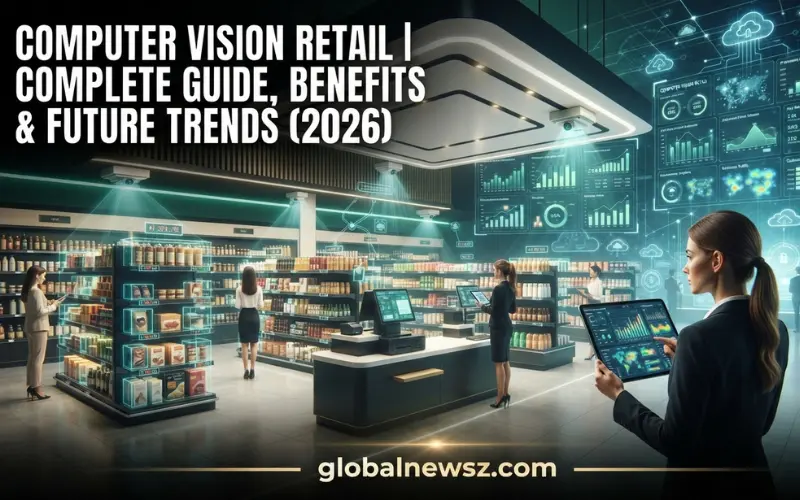
Computer Vision Retail is transforming the retail industry by enabling stores to analyze visual data, automate operations, and deliver smarter shopping experiences. Using advanced image recognition, machine learning, and real-time analytics, retailers can monitor inventory, understand customer behavior, improve security, and streamline checkout processes without relying entirely on manual supervision.
As consumer expectations continue to evolve, retailers are investing in intelligent technologies that increase efficiency while enhancing customer satisfaction. Computer vision has become one of the most valuable innovations because it allows businesses to make faster decisions based on visual information collected from cameras and sensors. This guide explains how computer vision works in retail, its key technologies, practical applications, benefits, challenges, and why it is becoming an essential part of modern retail operations.
What Is Computer Vision Retail?
Computer Vision Retail refers to the use of artificial intelligence-powered computer vision systems to interpret and analyze visual information within retail environments. These systems process images and video streams from cameras to identify products, monitor shelves, track customer movement, and automate various retail tasks.
Unlike traditional surveillance systems that simply record footage, computer vision actively interprets what it sees and provides useful insights for business operations.
Retailers use computer vision to:
- Monitor product availability
- Detect empty shelves
- Analyze customer traffic
- Improve inventory accuracy
- Prevent theft
- Automate checkout
- Enhance store security
- Optimize product placement
By converting visual information into actionable business data, retailers can improve efficiency and customer satisfaction.
Overview of Computer Vision Retail
| Feature | Details |
| Technology | Computer Vision |
| Industry | Retail |
| Primary Purpose | Visual Data Analysis |
| Common Applications | Inventory, Security, Checkout |
| Business Benefit | Automation & Customer Experience |
| Data Source | Cameras, Images, Video Streams |
How Computer Vision Works in Retail
Computer vision combines cameras, image processing, machine learning, and data analytics to understand activities inside retail stores.
A typical workflow includes:
Image Capture
High-definition cameras continuously capture images or video from different areas of the store.
Data Processing
Captured visual data is processed using computer vision algorithms that identify products, shelves, customers, shopping carts, and other objects.
Pattern Recognition
The system compares visual patterns with trained models to recognize products, detect unusual activities, and analyze customer behavior.
Decision Making
The analyzed information is converted into useful insights that help retailers improve operations, automate tasks, and reduce manual effort.
Reporting
Managers receive dashboards, notifications, and reports showing inventory status, customer traffic, sales trends, and operational performance.
Core Technologies Behind Computer Vision Retail
Several advanced technologies work together to make computer vision effective in retail environments.
Machine Learning
Machine learning enables systems to improve accuracy by learning from large volumes of retail images and customer interactions over time.
Deep Learning
Deep learning models recognize complex visual patterns, allowing systems to distinguish between thousands of different products with high accuracy.
Image Recognition
Image recognition identifies products, barcodes, packaging, and store layouts automatically.
Object Detection
Object detection allows systems to locate and classify multiple products or people within a single image or video frame.
Video Analytics
Video analytics continuously evaluates live camera feeds to detect activities such as customer movement, shelf conditions, and security incidents.
Edge Computing
Many retailers process visual information close to the camera using edge devices, reducing delays and minimizing bandwidth usage.
Why Retailers Are Investing in Computer Vision
The retail industry faces constant pressure to improve efficiency while delivering better customer experiences. Computer vision provides valuable insights that help businesses make faster and more informed decisions.
Key reasons for adoption include:
- Faster inventory management
- Reduced operational costs
- Improved shopping experiences
- Better product availability
- Enhanced security
- Data-driven decision making
- Increased employee productivity
- Higher customer satisfaction
As technology becomes more affordable, both large retailers and smaller businesses are beginning to explore computer vision solutions.
Major Applications of Computer Vision Retail
Computer vision supports a wide range of retail operations. Some of the most common applications include:
Inventory Monitoring
The system continuously checks shelf conditions, identifies missing products, and alerts staff when restocking is required.
Smart Shelf Management
Retailers can monitor product placement, pricing labels, and promotional displays without performing manual inspections.
Automated Checkout
Customers can complete purchases more quickly through cashier-less or self-service checkout experiences powered by visual recognition.
Customer Behavior Analysis
Retailers analyze shopping patterns, popular store areas, and customer movement to optimize store layouts and product placement.
Loss Prevention
Computer vision helps identify suspicious behavior, unauthorized access, or potential theft while improving overall store security.
Queue Management
Stores can monitor checkout lines in real time and notify staff when additional checkout counters should be opened.
Industries Benefiting from Computer Vision Retail
Although retail remains the primary focus, computer vision technology is also valuable across multiple sectors.
Industries adopting similar solutions include:
- Supermarkets
- Convenience Stores
- Fashion Retail
- Electronics Stores
- Shopping Malls
- Warehousing
- Logistics
- Healthcare Retail
- Pharmacy Chains
- Home Improvement Stores
Each industry uses computer vision differently, but the common goal is to improve operational efficiency, accuracy, and customer satisfaction.
Retail Use Cases of Computer Vision
Computer vision is reshaping retail by automating repetitive tasks and providing real-time insights. From inventory management to personalized shopping experiences, retailers are using visual intelligence to improve efficiency and customer satisfaction.
Smart Inventory Management
Keeping shelves stocked is one of the biggest challenges for retailers. Computer vision continuously monitors inventory levels and alerts employees when products need to be replenished.
Benefits include:
- Reduced out-of-stock situations
- Improved inventory accuracy
- Faster restocking
- Lower labor costs
- Better customer satisfaction
Instead of relying solely on manual shelf inspections, retailers receive real-time inventory updates throughout the day.
Automated Shelf Monitoring
Retail shelves directly influence purchasing decisions. Empty shelves or incorrectly placed products can reduce sales and create a poor shopping experience.
Computer vision systems can:
- Detect empty shelf spaces
- Identify misplaced products
- Monitor promotional displays
- Verify pricing labels
- Ensure planogram compliance
This allows store managers to respond quickly and maintain an organized shopping environment.
Cashierless Checkout
One of the most recognized applications of computer vision is automated checkout.
Using cameras and intelligent recognition systems, customers can:
- Pick products from shelves
- Complete shopping without scanning items
- Leave the store while purchases are calculated automatically
Benefits include:
- Faster checkout
- Shorter waiting times
- Reduced operational costs
- Improved customer convenience
Although cashierless technology requires investment, it has the potential to significantly enhance the shopping experience.
Customer Behavior Analytics
Understanding customer behavior helps retailers make informed business decisions.
Computer vision can analyze:
- Customer movement
- Shopping paths
- Popular store areas
- Product interactions
- Time spent in specific sections
These insights allow retailers to optimize store layouts, improve product placement, and increase sales opportunities.
Theft Detection and Loss Prevention
Retail theft remains a major concern for businesses of all sizes.
Computer vision enhances security by:
- Detecting suspicious activities
- Monitoring restricted areas
- Identifying unusual customer behavior
- Supporting security teams with real-time alerts
Rather than replacing human security personnel, these systems provide additional tools for faster response and improved store safety.
Personalized Shopping Experiences
Modern retailers aim to deliver more personalized customer experiences.
Computer vision can support:
- Product recommendations
- Interactive smart displays
- Virtual fitting rooms
- Digital mirrors
- Customer engagement systems
These innovations create a more interactive and enjoyable shopping journey.
Benefits of Computer Vision Retail
Retailers implementing computer vision technology often experience improvements across multiple areas of their business.
Increased Operational Efficiency
Automation reduces repetitive manual tasks, allowing employees to focus on customer service and strategic activities.
Better Inventory Accuracy
Real-time inventory tracking minimizes stock discrepancies and improves product availability.
Improved Customer Experience
Faster service, organized shelves, and shorter checkout times contribute to higher customer satisfaction.
Enhanced Security
Continuous monitoring helps reduce theft and improve store safety.
Better Business Insights
Retailers gain valuable data for improving store performance and making informed decisions.
Lower Operating Costs
Automation can reduce labor-intensive processes and improve overall productivity.
Challenges of Implementing Computer Vision
While computer vision offers significant benefits, retailers should also consider implementation challenges.
Initial Investment
Deploying cameras, servers, and intelligent software requires upfront investment.
Privacy Considerations
Retailers should comply with local privacy regulations and communicate transparently about the use of visual monitoring technologies.
Data Management
Large volumes of image and video data require secure storage, processing, and management.
Integration with Existing Systems
Computer vision solutions should work seamlessly with inventory systems, POS software, and business analytics platforms.
Staff Training
Employees need proper training to use new technologies effectively and interpret generated insights.
Planning these areas carefully helps ensure a smoother implementation process.
Best Practices for Successful Implementation
Businesses considering computer vision should follow a structured approach.
Recommended practices include:
- Define clear business objectives.
- Start with a pilot project.
- Choose scalable solutions.
- Integrate with existing retail systems.
- Train employees regularly.
- Monitor system performance.
- Review data accuracy.
- Continuously improve based on feedback.
A phased implementation often reduces risks and allows retailers to measure performance before expanding the solution.
Traditional Retail vs Computer Vision Retail
| Feature | Traditional Retail | Computer Vision Retail |
| Inventory Checks | Manual counting | Automated monitoring |
| Shelf Inspection | Employee inspection | Real-time camera analysis |
| Checkout | Cashier operated | Automated or self-service |
| Customer Insights | Surveys | Real-time analytics |
| Security | Standard CCTV | Intelligent visual detection |
| Decision Making | Historical reports | Live operational insights |
| Product Tracking | Manual records | Automated recognition |
| Operational Efficiency | Moderate | High |
Key Applications and Benefits
| Application | Business Benefit |
| Inventory Monitoring | Better stock accuracy |
| Shelf Analytics | Improved product availability |
| Automated Checkout | Faster customer service |
| Customer Analytics | Better store layout decisions |
| Theft Detection | Reduced inventory loss |
| Queue Monitoring | Shorter waiting times |
| Visual Search | Improved shopping experience |
| Smart Pricing | More accurate shelf management |
Is Computer Vision Retail Worth the Investment?
For many retailers, the answer depends on business size, operational goals, and digital transformation strategy. Organizations managing multiple stores, large inventories, or high customer traffic often benefit the most from computer vision solutions.
As hardware becomes more affordable and software continues to improve, adoption is expected to increase across both large retail chains and smaller businesses looking to modernize their operations.
Future Trends in Computer Vision Retail
Computer vision continues to evolve as retailers adopt smarter technologies to improve efficiency and customer experiences. Future developments are expected to focus on greater automation, better analytics, and more accurate visual recognition.
Some emerging trends include:
AI-Powered Predictive Analytics
Retailers will increasingly combine computer vision with predictive analytics to forecast customer demand, optimize inventory, and improve supply chain planning.
Autonomous Retail Stores
Cashierless stores will continue to expand, allowing customers to enter, shop, and leave without traditional checkout processes.
Smart Shopping Carts
Future shopping carts may automatically recognize products, calculate totals, and provide personalized recommendations during the shopping journey.
Visual Search Technology
Customers will be able to search for products using smartphone cameras instead of typing keywords, making product discovery faster and more convenient.
Personalized In-Store Experiences
Computer vision will help retailers deliver customized promotions, digital displays, and product recommendations based on shopping behavior while respecting applicable privacy requirements.
Advanced Robotics
Retail robots equipped with computer vision will assist with inventory scanning, shelf inspections, product transportation, and warehouse management.
Tips for Businesses Before Implementing Computer Vision
Successful implementation requires careful planning rather than simply purchasing new technology.
Consider these recommendations:
- Define clear business objectives.
- Evaluate existing infrastructure.
- Choose scalable solutions.
- Ensure compliance with privacy regulations.
- Train employees effectively.
- Monitor performance continuously.
- Integrate systems gradually.
- Review return on investment regularly.
A strategic implementation plan increases the likelihood of achieving measurable business benefits.
See Also:
- Tubefalire: Complete Guide, Meaning & Key Details (2026)
- Truzio: Complete Guide, Meaning & Key Details 2026
- Zvodeps: Complete Guide, Meaning & Key Details 2026
FAQs
What is Computer Vision Retail?
Computer Vision Retail refers to the use of computer vision technology to analyze images and video from retail environments, helping businesses automate operations, improve inventory management, and enhance customer experiences.
How does computer vision improve retail stores?
It improves inventory tracking, shelf monitoring, security, checkout efficiency, customer analytics, and operational decision-making through real-time visual data analysis.
Is computer vision only for large retailers?
No. While large retail chains often implement advanced systems, small and medium-sized businesses can also adopt scalable computer vision solutions based on their needs and budgets.
Does computer vision replace retail employees?
No. Computer vision is designed to automate repetitive tasks and provide valuable insights, allowing employees to focus on customer service, store operations, and business growth.
What technologies are used in computer vision retail?
Common technologies include machine learning, deep learning, image recognition, object detection, video analytics, cloud computing, and edge computing.
What are the biggest benefits of computer vision?
Major benefits include improved inventory accuracy, enhanced customer experiences, faster checkout, reduced operational costs, better security, and data-driven decision-making.
Are there privacy concerns?
Retailers should comply with local privacy laws, clearly communicate the use of monitoring technologies where appropriate, and implement strong data security measures to protect customer information.
What is the future of computer vision in retail?
The future includes smarter automation, predictive analytics, autonomous stores, intelligent robotics, visual search, personalized shopping experiences, and deeper integration with other retail technologies.
Conclusion
Computer Vision Retail is transforming the retail industry by enabling businesses to automate operations, improve inventory management, strengthen security, and deliver more efficient shopping experiences. By combining advanced image recognition, machine learning, and real-time analytics, retailers can make faster, data-driven decisions that support both operational efficiency and customer satisfaction.
As technology continues to advance, computer vision is expected to play an even greater role in modern retail environments. Organizations that invest in scalable solutions, employee training, and responsible data practices will be better positioned to adapt to changing consumer expectations and remain competitive in the years ahead.